All articles
No-Code Interactions in Divi 5 vs Custom JavaScript: When To Use Which
Divi 5 Interactions and Canvases build modals, panels and popups without code. We draw the line between no-code triggers and where you still need custom JavaScript.
Divi 5 vs AI Website Builders: Why Visual Builders Still Matter
AI builders like Wix AI, Hostinger Horizons and Framer draft a site in minutes. We compare them with Divi 5 on iteration, client edits and long-term maintenance.
AI Coding Governance for Small Teams: Budgets, Permissions, Approvals
You do not need an enterprise policy team to govern AI coding agents — you need answers to five questions: who can run agents, what they can write to, what needs approval, what each run costs, and what gets logged. This playbook maps each to the controls GitHub Copilot, Claude Code and OpenAI Codex already give you.
MCP Isn't Enough: Skills, Hooks, Plugins, and Packaged Workflows
MCP gives an agent tools, but it does not capture how your team actually works. The layer above MCP — skills, hooks and plugins — is where repeated prompts become reusable workflows: on-demand knowledge, deterministic guardrails, and packaged bundles you install in one step. Here is what each does and when to reach for it.
AI Agent Observability: Debug Logs, Tool-Call Traces, and Evidence in the PR
An agent that opens a PR is asking for your trust. Observability is how you decide whether to give it: debug logs of what it did, tool-call traces of how it did it, and evidence — tests, screenshots, reachability analysis — attached to the result. Here is what Copilot CLI and Cursor's security agents expose, and how to read it.
Browser-Aware Coding: Playwright MCP, Cursor Design Mode, and Fixing UI via the Real Page
When you ask an agent to fix a UI bug from code alone, it is guessing at what the page actually renders. Browser-aware coding closes that gap: Playwright MCP gives agents the accessibility tree and click/screenshot tools, and Cursor Design Mode lets you point at the exact element. Here is when seeing the page beats prompting about it.
Always-On Coding Agents: When the AI Becomes Part of CI/CD
Coding agents are moving from the editor into the pipeline: triggered by a merged PR, a new Linear issue, a PagerDuty incident or a nightly cron. This guide covers what Cursor Automations and Claude Code routines can do, which jobs fit, and where to keep a human in the loop.
Subagents Everywhere: How to Split a Big Task Across Specialized Agents
Subagents let you hand parts of a big task to specialized agents — research, test, security, frontend, refactor — each with its own tools and context window. This guide shows how to define them in Gemini CLI and Claude Code, and when parallelizing actually helps versus when it wastes tokens.
Playwright Test Agents: AI That Plans, Generates, and Heals Your E2E Tests
Playwright now ships three AI agents that turn end-to-end testing into a pipeline: a planner that explores your app, a generator that writes the tests, and a healer that repairs them when locators break. Here is how each works and how to wire them into Claude Code, VS Code or Codex.
Cloud Agents vs Self-Hosted Agents: When Should Code Leave the Laptop?
AI coding agents now run in three places: on your laptop, in a vendor's cloud, or self-hosted in your own environment. This guide breaks down the tradeoffs — isolation, internal dependencies, secrets, compliance and cost — so you know when code should leave the machine.
AGENTS.md vs CLAUDE.md vs Cursor Rules vs Gemini Conductor
Every serious AI coding agent now reads a project rules file before it touches your code. This guide compares AGENTS.md, CLAUDE.md, Cursor Rules and Gemini Conductor, and shows exactly what to write so agents follow your standards, build commands and architecture.
Gemini CLI Is Ending for Consumers: What the Move to Antigravity CLI Means
Google is winding down Gemini CLI for free and paid consumer users and replacing it with Antigravity CLI, its agent-first platform. Here is who has to migrate, what enterprise Gemini Code Assist keeps, and why terminal assistants are becoming agent platforms.

Disney Is Dropping GitHub Copilot. The Autocomplete Era Is Over
Disney cuts Copilot, Kiro and Q in August, keeps Claude and Cursor, adds Codex. Engineers barely used the suggestion tool while power users drive agents from the terminal — the interaction model lost, not the vendor.

Semrush Rebuilt Its Content Pipeline in Claude Code — the Transferable Part Isn't the Prompts
n8n handled the research and failed at drafting, so Semrush rebuilt the pipeline as nine chained Claude Code skills that pass files between steps. The architecture is worth copying, and so is the reframing: hallucinations didn't stop, they got twenty times cheaper to catch.

Claude Code Adds a Built-In Browser, Shareable Artifacts, iOS Simulator and Linux
Four July 2026 shipments push Claude Code toward seeing and sharing its own work: a sandboxed browser pane, artifacts published to claude.ai, iOS Simulator in beta and a Linux desktop app. Plus the sharing detail most people will skim past.

550k Lines in 11 Days for $165k - and the Zig Creator Called It Slop
Bun's AI migration gave the read-the-code debate its first real data point: 550k lines, 11 days, $165k, memory down from 6.7GB to 609MB. Then Zig's creator called the result unreviewed slop. Both are right about different things.

Claude Opus 5 Lands as the New Default in Claude Code - What's Different for Developers
Anthropic's new Claude Opus 5 is the default model in Claude Code, matching much of Fable 5 at ~half the price. The new /effort dial, the asks-before-guessing judgment shift, the coding benchmarks - and the honest caveats for devs.

Building AI Agents and LLM Workflows in n8n
n8n has become a practical orchestration layer for AI: connect any LLM, use the AI Agent nodes for tool calls, ground answers in your data with RAG and vector stores, and chain it all into real workflows. How to build it - self-hosted or on n8n Cloud - and the guardrails you actually need.

How to Self-Host n8n on a VPS: A Practical Guide
Self-hosting n8n is simpler than it looks: a small always-on VPS, Docker, a domain and HTTPS. This guide covers the Docker and npm install, the env vars that matter, security and upkeep, backups and the encryption key - and when you should just use n8n Cloud instead.

What Is n8n? The Open-Source Workflow Automation Devs Can Actually Own
n8n is an open-source, node-based workflow automation tool you can self-host and own - or run managed on n8n Cloud. What it is, how nodes, triggers, webhooks and code nodes work, its 400+ integrations and AI features, and how it stacks up against Zapier and Make.

An AI Agent Deleted a Founder's Entire Mac. The Lesson Isn't 'Bad Model.'
A high-autonomy coding agent wiped a founder's Mac after a shell-variable bug triggered a recursive delete on his home directory. The real fix isn't a better model - it's never letting an agent run with full access on a machine you can't afford to lose.

How to Host Your Own AI Agent (Without a DevOps Team)
Want an AI agent that's actually yours - always on, private, wired into your tools? Self-hosting OpenClaw on a VPS no longer needs DevOps skills. Self-hosted vs cloud, managed vs unmanaged, the security basics, and how to do it with Verpex.
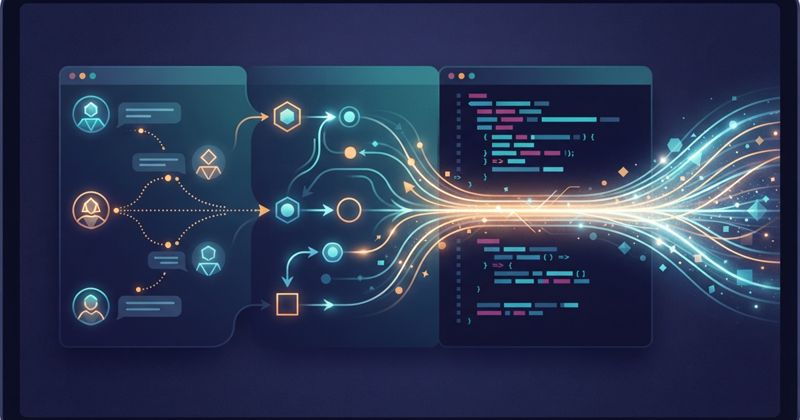
OpenAI's Chat / Work / Codex Split: What It Means for How You Actually Build
OpenAI reframed ChatGPT into three products — Chat for answers, Work for workflows, Codex for development. Here's a practical developer's decision tree for when to reach for which, the Codex workflow features worth knowing (the /goal loop, subagents, PR Chat, Sites, API-triggered Workspace Agents), and a grain-of-salt read on the vendor claims.

OpenAI's GPT-5.6 Lands: Sol, Terra, Luna and a New Coding State of the Art
OpenAI launched GPT-5.6 — Sol, Terra and Luna. Sol claims a new coding state of the art on the Artificial Analysis Coding Agent Index with far fewer tokens; Terra and Luna push frontier-class coding down to $6–$15 output. Here's how to route between them.
Claude Code and the Developer's New Job: Less Writing Code, More Running the System
With agents like Claude Code, the work shifts from typing code to directing it. Boris Cherny's five archetypes as modes a developer switches between across a project.

Claude Cowork: The Complete Guide
Anthropic's Claude Cowork turns Claude into an agentic coworker that runs multi-step knowledge work on your desktop. What it does, how to use it, and its limits.
Claude Design Adds Two-Way Sync With Claude Code via /design-sync
Anthropic's June 17 update wires Claude Design and Claude Code together with a /design-sync command, so a design and its code can stay aligned in both directions.
The Ideal Stack for a Solo Developer: AI Editor, Hosting, Database, Auth and Analytics
A solo stack lives or dies on the free tier. Verified free-tier limits and entry prices across AI editors, hosting, databases, auth and analytics for shipping solo.
Anatomy of a Hype: Where GLM-5.2 Actually Matches Claude Opus
Zhipu's open-weight GLM-5.2 is billed as a Claude Opus rival. We separate the benchmarks where that holds from the marketing that doesn't.
The Most Common Beginner Mistakes in Vibe Coding
Every common vibe-coding mistake is the throwaway-project mindset misapplied to real software. The errors that burned beginners in 2025, and how to avoid each one.
Claude Sonnet 5: Anthropic's Cheaper, Most Agentic Sonnet Yet
Anthropic launched Claude Sonnet 5 — its most agentic Sonnet, priced 40-60% below Opus 4.8 and now the default across plans. What it costs, how it benchmarks, and what it means for building agents.
Saaspocalypse: Will Prompt-to-App Tools Threaten Small Software Companies?
Prompt-to-app tools have crashed the cost of building software. Are small SaaS companies doomed? An opinion: the threat is real for prototypes, overstated for products.
AI Agents in a Monorepo: Working With Large Legacy Codebases
Getting useful work from AI agents in big repos is a context-engineering problem, not a model-size one. A deep dive into indexing, AGENTS.md, monorepo tooling and SWE-bench.
Vibe Coding for the Backend: Auth, Databases, Cron Jobs and API Traps
Backend failures stay invisible until exploited. A technical guide to the auth, database, cron and API traps where AI-generated backend code most reliably goes wrong.
Agentic Code Review: When AI Checks AI and the Human Decides
AI reviewers now read pull requests, gather repo context and post findings. How agentic code review works, why AI can check AI, and where it still needs a human.
How to Review a GitHub Repo Before an AI Agent Executes It
Before you let an agent clone and run an unfamiliar repository, do a two-minute triage. This checklist covers package scripts, shell commands, network calls, recent commits, and issue history.
Secrets Hygiene for Vibe Coders
A developer workstation holds production tokens, database passwords, and session cookies, and infostealers target exactly that. A concrete guide to .env, GitHub tokens, browser cookies, local databases, and pre-commit checks.
How to Audit AI-Generated Code Before Shipping to Production
AI now writes a large share of production code, and it is not safe by default. A practical, standards-backed checklist for auditing AI-generated code before it ships.

The Non-Developer Developer: What Someone Who Only Knows How to Prompt Must Learn
Karpathy said vibe coding is for throwaway weekend projects. So what must a prompt-only builder still learn to ship something real? Ten fundamentals — secrets, access control, git, backups — each with the real-world failure behind it.
The Curl Maintainer Burnout Story Every AI Developer Should Read
curl paused its bug bounty after AI-generated "slop" reports buried a tiny team. The lesson is not anti-AI: it is how to report real bugs instead of flooding maintainers with confident, fabricated noise.
Never Give a Coding Agent Your Whole Machine on the First Run
The first time you run an AI coding agent, granting it everything is the easy mistake. This is a practical guide to sandboxing with containers, restricted directories, and environment isolation.
From Figma to React: The Best Design-to-Code Workflow in 2026
Figma-to-code finally works in 2026 — if you set it up right. Here's the real pipeline: Figma's Dev Mode MCP server, design tokens mapped to Tailwind, an agent like Cursor or Claude Code, and the 20–40% cleanup no tool removes.
The Hidden Costs of AI Coding: Tokens, Subscriptions and Vendor Lock-In
The sticker price is the least interesting number on an AI coding bill. This analysis breaks down the mechanics that hide the real cost: token pricing, weekly caps, the 2025 pricing controversies, vendor lock-in and the review debt nobody budgets for.
AI Coding Agents and Malicious GitHub Repos: The New Vibe Coding Threat Model
Autonomous coding agents execute what they read. The Miasma worm and a 10,000-repo campaign show how poisoned GitHub repositories now target agents directly. Here is the threat model and how to defend it.
Vibe Coding for Founders: 10 Internal Tools You Can Build Without a Team
AI lets a founder build the internal tools that used to need a hire. Here are ten realistic ones — dashboards, CRMs, bots, triage queues — each grounded in what the tools actually do, plus the security failures you must design around.
Tests Are the New Prompt: Making AI Write Verifiable Code
A prompt is a lossy spec; a test is one the machine can evaluate. Here's why AI-written code needs a verifier, the failure modes tests catch, and a concrete workflow that lets an agent iterate to correct code without you in the loop.
MCP Explained Simply: Connecting Your AI Assistant to GitHub, Databases and Tools
The Model Context Protocol is the open standard that lets an AI assistant actually use GitHub, databases and tools. Here's what it is, how the host-client-server architecture works, and who adopted it — explained simply, from the official spec.

Securing AI Coding Agents: Sandboxes, Permissions and Audit Logs
AI coding agents can run shell commands, push commits and call services on their own. This guide covers the three controls that actually contain them: permission models, OS-level sandboxes and tamper-evident audit logs, grounded in OWASP, Claude Code, Codex and Copilot docs.
Get a Free Week of Claude Code With a Guest Pass
Claim a guest pass for 7 days of full Claude Code access — no credit card. Here's what Claude Code does, what the free week includes, and how to claim one.
Lovable vs Bolt vs Replit: The Fastest Path to an MVP
Lovable, Bolt, and Replit all turn prompts into apps, but take different routes. We compare the design-first builder, the in-browser full-stack, and the all-in-one cloud workshop.
Cursor vs Claude Code vs Codex: Which AI Coding Tool Is Worth It?
Cursor, Claude Code, and Codex all start at $20/month but solve different problems. We compare the editor, the terminal agent, and the cloud agent on price, models, and workflow.
Vibe Coding in 2026: From Prompts to Autonomous Agents
Vibe coding went from a 2025 tweet to Word of the Year. We trace the shift from chat prompts to autonomous agents, the real adoption data, and the honest limits in 2026.

The Prompt-to-PR Workflow: Briefing an AI Agent Like a Senior Developer
Turn a written brief into a reviewable pull request. This guide shows how to delegate to a coding agent the way you'd brief a senior developer, with a step-by-step workflow.

AI Agents as Junior Developers: Where They Help and Where They're Dangerous
AI coding agents behave like eager junior developers: fast on scoped work, dangerous with judgment and security. The data on where to trust them and where not to.
How to Vibe-Code Without Creating Technical Debt
Vibe coding is fast and quietly expensive. Here's a research-backed checklist to keep AI's speed without the technical debt, with a practice-by-practice gate table.